Toe Stretches May Help Hammertoe

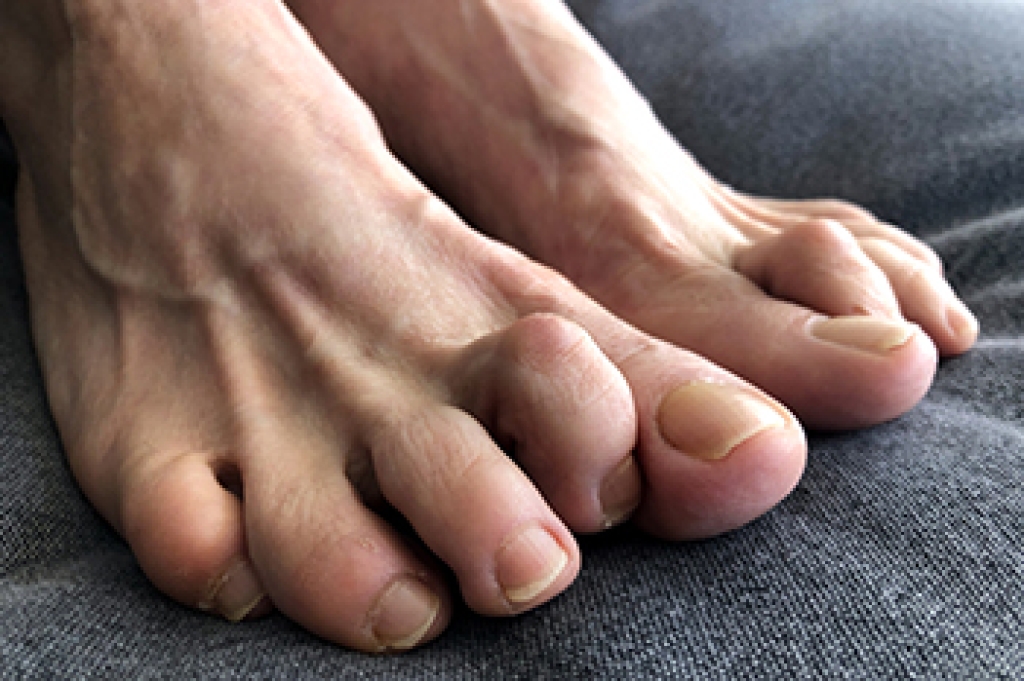
The foot condition known as hammertoe is easy to notice. It causes the second or third toe to bend downward at the tip, forcing the toe upward at the middle joint resembling a hammer. It is considered to be a deformity and corns may develop on top of the joint as it rubs against the shoe. Additional symptoms may include swollen toes, pain in the affected joint, and difficulty walking. Practicing toe stretches can be an effective hammertoe exercise. This is done by getting into a runner’s starting position and shifting the body’s weight over the toes. Hold for several seconds while the toes are pressed against the floor. Another exercise is called toe flexion and extension and starts with sitting with the legs straight out. After placing the affected foot over the opposite knee, the toes can be pulled back and pointed as best as possible. This may be difficult to accomplish, depending on the severity of the hammertoe. If you are afflicted with this condition, you must be under the care of a podiatrist who can help you with proper treatment which may include surgery to permanently straighten the toes.

Hammertoe

Hammertoes can be a painful condition to live with. For more information, contact Frederick Matthews, DPM from Innovative Foot and Ankle Care. Our doctor will answer any of your foot- and ankle-related questions.

Hammertoe is a foot deformity that affects the joints of the second, third, fourth, or fifth toes of your feet. It is a painful foot condition in which these toes curl and arch up, which can often lead to pain when wearing footwear.

Symptoms

  • Pain in the affected toes
  • Development of corns or calluses due to friction
  • Inflammation
  • Redness
  • Contracture of the toes

Causes

Genetics – People who are genetically predisposed to hammertoe are often more susceptible

Arthritis – Because arthritis affects the joints in your toes, further deformities stemming from arthritis can occur

Trauma – Direct trauma to the toes could potentially lead to hammertoe

Ill-fitting shoes – Undue pressure on the front of the toes from ill-fitting shoes can potentially lead to the development of hammertoe

Treatment

Orthotics – Custom made inserts can be used to help relieve pressure placed on the toes and therefore relieve some of the pain associated with it

Medications – Oral medications such as anti-inflammatories or NSAIDs could be used to treat the pain and inflammation hammertoes causes. Injections of corticosteroids are also sometimes used

Surgery – In more severe cases where the hammertoes have become more rigid, foot surgery is a potential option

If you have any questions, please feel free to contact our office located in Plano, TX . We offer the newest diagnostic and treatment technologies for all your foot care needs.
Read more about What Are Hammertoes?

A Broken Toe Needs Rest

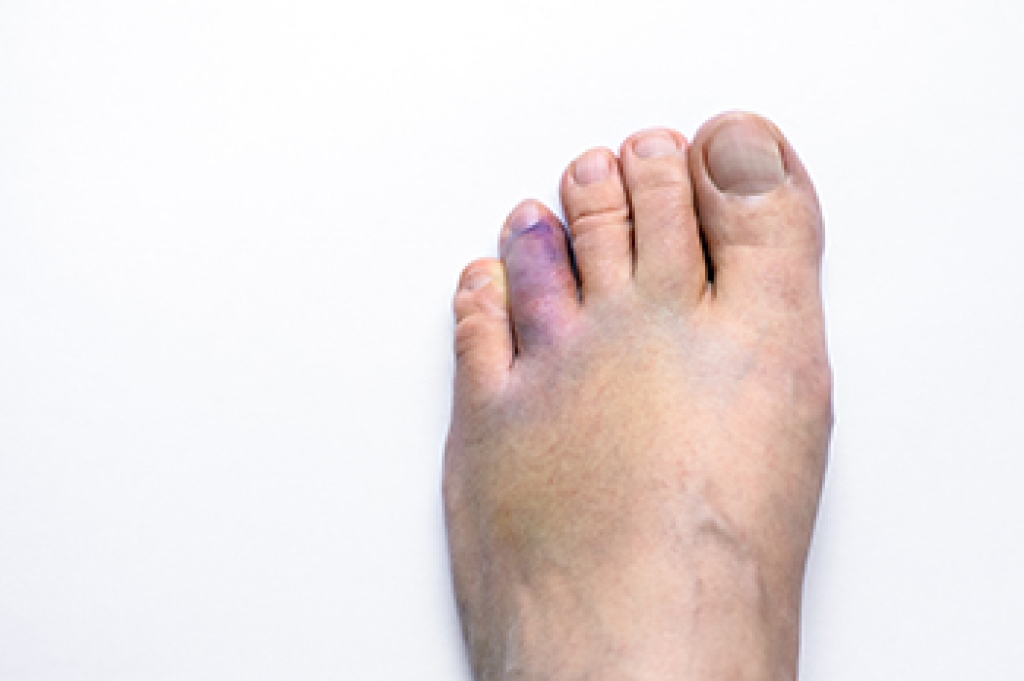
A broken toe can cause pain, discomfort, and temporarily change the way daily activities are accomplished. A broken toe is difficult to walk on, and rest is needed to accelerate recovery. Some patients may find it helpful to use crutches, which can keep the weight off of the toe. A broken toe can happen from stubbing it on a piece of furniture, enduring an injury, or dropping a heavy object on it. Fractured toes may occur more often than breaking other bones in the body. This is because the bones in the toes are small, and are located at the end of the body. Common symptoms of this type of injury can consist of immediate bruising, swelling, and the affected area may be red. If a toe is severely broken, a bone may protrude through the skin and can appear to be deformed. Many people have positive results in using the buddy taping method for treatment. This can be successful in less severe fractures and is done by taping the broken toe to the toe next to it. If you have broken your toe, please schedule an appointment with a podiatrist sooner rather than later who can guide you toward the correct treatment method.

A broken toe can be very painful and lead to complications if not properly fixed. If you have any concerns about your feet, contact Frederick Matthews, DPM from Innovative Foot and Ankle Care. Our doctor will treat your foot and ankle needs.

What to Know About a Broken Toe

Although most people try to avoid foot trauma such as banging, stubbing, or dropping heavy objects on their feet, the unfortunate fact is that it is a common occurrence. Given the fact that toes are positioned in front of the feet, they typically sustain the brunt of such trauma. When trauma occurs to a toe, the result can be a painful break (fracture).

Symptoms of a Broken Toe

  • Throbbing pain
  • Swelling
  • Bruising on the skin and toenail
  • The inability to move the toe
  • Toe appears crooked or disfigured
  • Tingling or numbness in the toe

Generally, it is best to stay off of the injured toe with the affected foot elevated.

Severe toe fractures may be treated with a splint, cast, and in some cases, minor surgery. Due to its position and the pressure it endures with daily activity, future complications can occur if the big toe is not properly treated.

If you have any questions, please feel free to contact our office located in Plano, TX . We offer the newest diagnostic and treatment technologies for all your foot care needs.

Read more about What to Know About a Broken Toe

History of Plantar Fasciitis

Plantar fasciitis is one of the most widespread afflictions of the foot that primarily affects the plantar fascia. It occurs when this part of the foot becomes aggravated and inflamed. Plantar fasciitis has an interesting history which may be helpful in knowing to learn more about this ailment. The condition was first described in the year 1812 by a man named Wood. Wood attributed the condition to tuberculosis at the time. Over the years, plantar fasciitis has gone by different names. For example, it has sometimes been called painful heel syndrome or subcalcaneal pain. As time progressed and the field of podiatry developed, modern science learned more about plantar fasciitis. Today, it is one of the most common conditions that modern podiatrists are trained in identifying and treating. If you believe that you may have plantar fasciitis, contact a podiatrist today.

Plantar fasciitis can be very painful and inconvenient. If you are experiencing heel pain or symptoms of plantar fasciitis, contact Frederick Matthews, DPM  from Innovative Foot and Ankle Care. Our doctor can provide the care you need to keep you pain-free and on your feet.

What Is Plantar Fasciitis?

Plantar fasciitis is the inflammation of the thick band of tissue that runs along the bottom of your foot, known as the plantar fascia, and causes mild to severe heel pain.

What Causes Plantar Fasciitis?

  • Excessive running
  • Non-supportive shoes
  • Overpronation
  • Repeated stretching and tearing of the plantar fascia

How Can It Be Treated?

  • Conservative measures – anti-inflammatories, ice packs, stretching exercises, physical therapy, orthotic devices
  • Shockwave therapy – sound waves are sent to the affected area to facilitate healing and are usually used for chronic cases of plantar fasciitis
  • Surgery – usually only used as a last resort when all else fails. The plantar fascia can be surgically detached from the heel

While very treatable, plantar fasciitis is definitely not something that should be ignored. Especially in severe cases, speaking to your doctor right away is highly recommended to avoid complications and severe heel pain. Your podiatrist can work with you to provide the appropriate treatment options tailored to your condition.

If you have any questions, please feel free to contact our office located in Plano, TX . We offer the newest diagnostic and treatment technologies for all your foot care needs.

Read more about Plantar Fasciitis

Various Types of Corns

A corn is one of the ways the body protects damaged skin against excessive friction. It is a small, hardened area of skin that can form on various areas of the foot. These can include the pinky toe, the soles of the feet, or the top of the toes. A corn that develops on the side of the pinky toe can be painful, and wider shoes may need to be purchased that may help to bring partial relief. Hard corns are found in the above areas and often occurs as a result of wearing shoes that do not fit correctly. Soft corns can be found between the toes, and are named for the consistent moisture that is found there. If the corn is small, a protective pad can be worn over it which may reduce the pressure from the shoe. Patients who have larger corns are often seen by a podiatrist who can use effective techniques for removal. Please confer with this type of doctor who can guide you toward effective prevention methods.

Corns can make walking very painful and should be treated immediately. If you have questions regarding your feet and ankles, contact Frederick Matthews, DPM of Innovative Foot and Ankle Care. Our doctor will treat your foot and ankle needs.

Corns: What Are They? And How Do You Get Rid of Them?
Corns are thickened areas on the skin that can become painful. They are caused by excessive pressure and friction on the skin. Corns press into the deeper layers of the skin and are usually round in shape.

Ways to Prevent Corns
There are many ways to get rid of painful corns such as:

  • Wearing properly fitting shoes that have been measured by a professional
  • Wearing shoes that are not sharply pointed or have high heels
  • Wearing only shoes that offer support

Treating Corns

Although most corns slowly disappear when the friction or pressure stops, this isn’t always the case. Consult with your podiatrist to determine the best treatment option for your case of corns.

If you have any questions, please feel free to contact our office located in Plano, TX . We offer the newest diagnostic and treatment technologies for all your foot care needs.

Read more about Understanding Corns and Calluses

Consequences of Improper Diagnosis of an Ankle Fracture

If an ankle fracture is mistaken for an ankle sprain, it can have serious consequences on proper healing. An ankle fracture is when there is a crack or break in the bones that form the ankle joint. A sprain involves ligaments that hold the ankle bones together rather than harm the bones themselves. Both injuries can result from the ankle moving beyond its normal range of motion. However, a fracture requires more intense treatment than a sprain. Prolonged pain and bruising of the ankle are good indicators that the ankle may be broken. If you have injured your ankle and are unsure if it is broken or sprained, see a podiatrist who can properly differentiate these conditions and provide the best treatment.

Broken ankles need immediate treatment. If you are seeking treatment, contact Frederick Matthews, DPM from Innovative Foot and Ankle Care. Our doctor can provide the care you need to keep you pain-free and on your feet. 

Broken Ankles
A broken ankle is experienced when a person fractures their tibia or fibula in the lower leg and ankle area. Both of these bones are attached at the bottom of the leg and combine to form what we know to be our ankle.

When a physician is referring to a break of the ankle, he or she is usually referring to a break in the area where the tibia and fibula are joined to create our ankle joint. Ankles are more prone to fractures because the ankle is an area that suffers a lot of pressure and stress. There are some obvious signs when a person experiences a fractured ankle, and the following symptoms may be present.

Symptoms of a Fractured Ankle

  • Excessive pain when the area is touched or when any pressure is placed on the ankle
  • Swelling around the area
  • Bruising of the area
  • Area appears to be deformed

If you suspect an ankle fracture, it is recommended to seek treatment as soon as possible. The sooner you have your podiatrist diagnose the fracture, the quicker you’ll be on the way towards recovery.

If you have any questions, please feel free to contact our office located in Plano, TX . We offer the newest diagnostic and treatment technologies for all your foot care needs.

Read more about All About Broken Ankles

Connect With Us