
Children and Walking Barefoot

An infants foot is made of soft, flexible cartilage, which gradually hardens as the baby develops and will be formed in the late teenage years. Most babies are born with flat feet, and the shape of the foot is often evident at approximately two years of age. The foot shape is important to consider when choosing the right shoes. If the big toe is the longest of all the toes, it is considered to be tapered. Conversely, a rounded foot shape consists of the second or third toe being the longest, and when the toes are the same length, this is considered to be a square foot shape. Children’s foot health may include having the toddler crawl and walk barefoot while indoors, this helps strengthen the entire foot. The toes can also become stronger as they grip the floor and stretch. When it is time for the first pair of shoes to be purchased, it is beneficial they are made of soft leather material, and have flexible soles. If you would like additional information about how to take proper care of your child's feet, it is suggested that you consult with a podiatrist who can provide you with helpful information.

The health of a child’s feet is vital to their overall well-being. If you have any questions regarding foot health, contact Frederick Matthews, DPM of Innovative Foot and Ankle Care. Our doctor can provide the care you need to keep you pain-free and on your feet.

Tips for Keeping Children's Feet Healthy

  • Make sure their shoes fit properly
  • Look for any signs of in-toeing or out-toeing
  • Check to see if they have Clubfoot (condition that affects your child’s foot and ankle, twisting the heel and toes inward) which is one of the most common nonmajor birth defects.
  • Lightly cover your baby’s feet (Tight covers may keep your baby from moving their feet freely, and could prevent normal development)
  • Allow your toddler to go shoeless (Shoes can be restricting for a young child’s foot)
  • Cut toenails straight across to avoid ingrown toenails
  • Keep your child’s foot clean and dry
  • Cover cuts and scrapes. Wash any scratches with soap and water and cover them with a bandage until they’ve healed.

If you have any questions, please feel free to contact our office located in Plano, TX . We offer the newest diagnostic and treatment technologies for all your foot care needs.
Read more about What to Do to Keep Your Child’s Feet Healthy

Foam Roller Ankle Stretches

There are many different reasons why stretching the feet is an important part of one’s daily health routine. Performing stretches on the feet can improve mobility, flexibility, and resilience. This can essentially make the feet better able to manage exercise routines and physical activity. One important stretch that you might consider performing on your feet is known as a foam roller ankle stretch. This stretch can be performed in a seated position with one foot at a time being rested on a half foam roller. One then repeatedly tilts the roller upwards and downwards to feel the stretch in the feet. Perform this stretch on both feet. As a result of performing this stretch, the ankles will experience more movement and flexibility. If you are someone that is looking to strengthen their feet, it is suggested that you reach out to a podiatrist today. Podiatrists are foot specialists who can help answer any questions you might have and provide treatment.

Why Stretching Is Important for Your Feet

Stretching the feet is a great way to prevent injuries. If you have any concerns with your feet consult with Frederick Matthews, DPM from Innovative Foot and Ankle Care. Our doctor will assess your condition and provide you with quality foot and ankle treatment.

Stretching the Feet

Stretching the muscles in the foot is an important part in any physical activity. Feet that are tight can lead to less flexibility and make you more prone to injury. One of the most common forms of foot pain, plantar fasciitis, can be stretched out to help ease the pain. Stretching can not only ease pain from plantar fasciitis but also prevent it as well. However, it is important to see a podiatrist first to determine if stretching is right for you. Podiatrists can also recommend other ways to stretch your feet. Once you know whether stretching is right for you, here are some excellent stretches you can do.

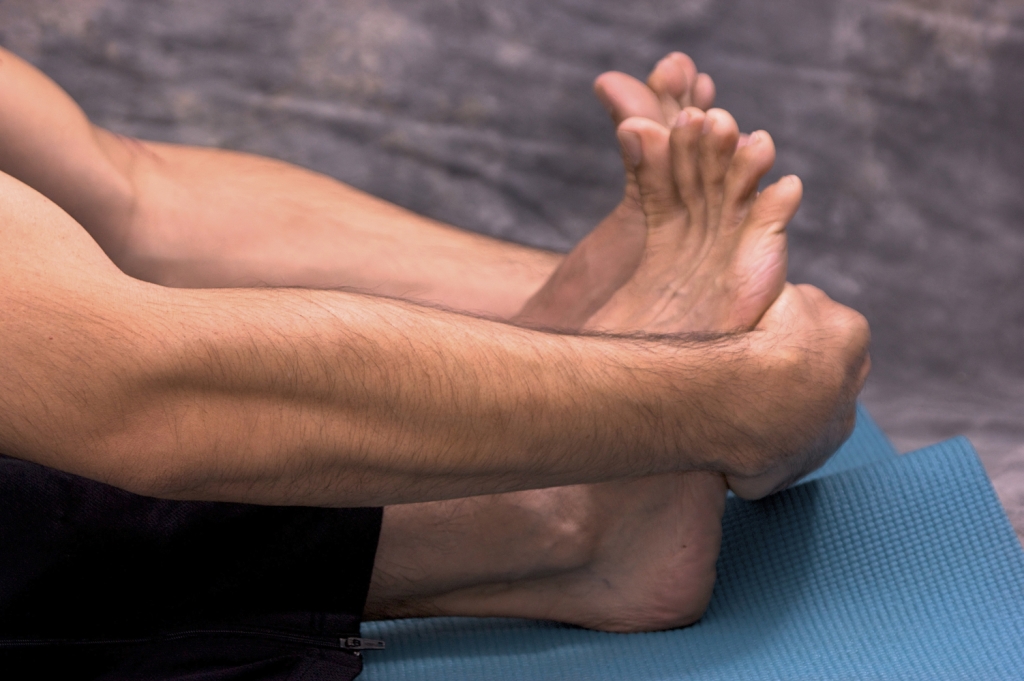
  • Using a foam roller or any cylindrical object (a water bottle or soda can will do), roll the object under your foot back and forth. You should also exert pressure on the object. Be sure to do this to both feet for a minute. Do this exercise three times each.
  • Similar to the previous exercise, take a ball, such as a tennis ball, and roll it under your foot while seated and exert pressure on it.
  • Grab a resistance band or towel and take a seat. If you are using a towel, fold it length wise. Next put either one between the ball of your foot and heel and pull with both hands on each side towards you. Hold this for 15 seconds and then switch feet. Do this three times for each foot.
  • Finally hold your big toe while crossing one leg over the other. Pull the toe towards you and hold for 15 seconds. Once again do this three times per foot.

It is best to go easy when first stretching your foot and work your way up. If your foot starts hurting, stop exercising to ice and rest the foot. It is advised that you then see a podiatrist for help.

If you have any questions please contact our office located in Plano, TX . We offer the newest diagnostic and treatment technologies for all your foot and ankle needs.

Read more about Stretching Your Feet

Ways of Treating Plantar Warts

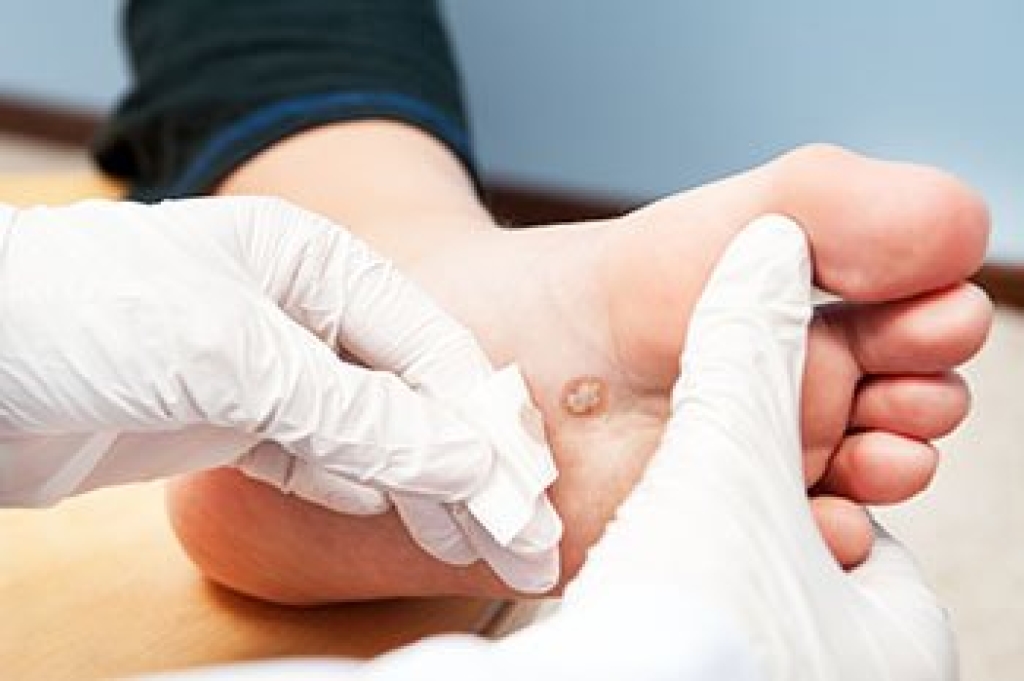
Warts on the skin are caused by coming in contact with a virus called the human papillomavirus, or HPV. Plantar warts are a specific type of wart that grows on the bottom of the foot. A plantar wart may start as a small round area of tough skin but may increase in size. Tiny clogged blood vessels that appear as small black dots may appear on the site of the wart. It may take as long as six months for a wart to appear after the foot is exposed to the virus. A podiatrist can examine the plantar wart and determine the best treatment options, which may include cryotherapy by liquid nitrogen, which is generally used on adults or older children. Other methods of treatment involve scraping the wart off the foot, injections of antiviral medication, and laser therapy. Treatment for plantar warts varies and unfortunately, warts can come back even after treatment is completed. If you have a plantar wart that is growing very quickly, or one that is bleeding or appears to be infected, it is strongly suggested that you seek help from a podiatrist, who is specially trained to deal with foot problems.

Plantar warts can be very uncomfortable. If you need your feet checked, contact Frederick Matthews, DPM from Innovative Foot and Ankle Care. Our doctor will assist you with all of your foot and ankle needs.

About Plantar Warts

Plantar warts are the result of HPV, or human papillomavirus, getting into open wounds on the feet. They are mostly found on the heels or balls of the feet.

While plantar warts are generally harmless, those experiencing excessive pain or those suffering from diabetes or a compromised immune system require immediate medical care. Plantar warts are easily diagnosed, usually through scraping off a bit of rough skin or by getting a biopsy.

Symptoms

  • Lesions on the bottom of your feet, usually rough and grainy
  • Hard or thick callused spots
  • Wart seeds, which are small clotted blood vessels that look like little black spots
  • Pain, discomfort, or tenderness of your feet when walking or standing

Treatment

  • Freezing
  • Electric tool removal
  • Laser Treatment
  • Topical Creams (prescription only)
  • Over-the-counter medications

To help prevent developing plantar warts, avoid walking barefoot over abrasive surfaces that can cause cuts or wounds for HPV to get into. Avoiding direct contact with other warts, as well as not picking or rubbing existing warts, can help prevent the further spread of plantar warts. However, if you think you have developed plantar warts, speak to your podiatrist. He or she can diagnose the warts on your feet and recommend the appropriate treatment options.

If you have any questions, please feel free to contact our office located in Plano, TX . We offer the newest diagnostic and treatment technologies for all your foot care needs.

Read more about All About Plantar Warts

Considering Speed When Choosing a Running Shoe

When choosing or shopping for a running shoe, many runners and athletes consider a variety of factors. For example, runners might select a specific type of shoe because it is better suited to a particular kind of terrain. The degree to which running shoes might actually increase an athlete’s speed, however, is another important factor to consider when purchasing a pair of running shoes. This is to say that running shoes might actually make a runner faster because a good pair of running shoes will essentially increase one’s running economy. In other words, good running shoes might maximize the effort that a runner puts into their runs, ultimately increasing their speed. If you are someone who is looking for the perfect pair of running shoes, it is suggested that you contact a podiatrist today.

If you are a runner, wearing the right running shoe is essential. For more information, contact Frederick Matthews, DPM from Innovative Foot and Ankle Care. Our doctor can provide the care you need to keep you pain-free and on your feet.

Choosing the Right Running Shoe for Your Foot Type

To increase performance and avoid the risk of injury, it is important to choose the right running shoe based on your foot type. The general design of running shoes revolves around pronation, which is how the ankle rolls from outside to inside when the foot strikes the ground.

  • Neutral runners are able to choose from a wide variety of shoes, including minimalist shoes or even going barefoot.
  • Runners who overpronate, or experience an over-abundance of ankle rolling, should choose shoes that provide extra motion control and stability.
  • Runners who underpronate, or supinate, have feet that have high arches and lack flexibility, preventing shock absorption. They require shoes with more flexibility and cushion.

If you have any questions, please feel free to contact our office located in Plano, TX . We offer the newest diagnostic and treatment technologies for all your foot care needs.
Read more about Choosing the Right Running Shoe

Do You Suffer From Painful Feet?

Painful deformities, such as hammertoes, can be treated. Stop living with foot pain, and have beautiful feet again!

Connect With Us